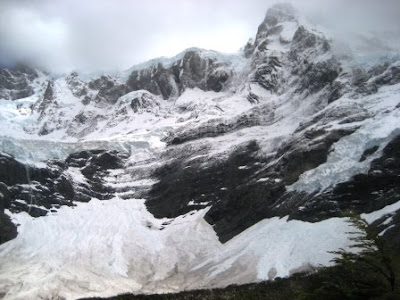
I've adored Michael J. Fox ever since he played Alex P. Keaton on Family Ties back in the day, and I've been saddened by his Parkinson's disease.
Recently he traveled to Bhutan, where he noticed a significant lessening of his symptoms at high elevations. In fact, he became so exuberant that he nearly fell off a cliff in his dashing about.
His documentary on the value of optimism airs on May 7 on ABC.
11 April 2009
03 March 2009
Wouldn't you rather BeInBhutan?
Well, if you've got a good grasp of accounting, poverty and environmental issues, Bhutan needs you for a 20 day consultancy with the United Nations Development Programme (UNDP).
The job requires that you
Between March and May, 2009.
Applications are due March 16.
The job requires that you
1 - Locate, review and assess existing information on public environmental expenditures
2 – Analysis of public environmental expenditures and recommendations
Between March and May, 2009.
Applications are due March 16.
Bold Bhutan Beckons
Namaste, trashi delek, kuzu zampo, my dear patient readers (if, indeed, you are out there...)!
I have left you on your own much of this year - giving you ample time to contemplate your navel, and achieve enlightenment. I trust you are nearly there.
And, I'm writing you a book that will contain all my gathered wisdom about religion, ecology and Bhutan in one place (around campus, this is known as a dissertation. It is typically read by only 3 or 4 people. But I hope to revise mine into something that a few dozen people might want to read).


In the meantime, I'll have to entrust you to these other authors, who exhort you to listen as Bold Bhutan Beckons, and who explain the unique Ways of Knowing in Bhutan.
I have left you on your own much of this year - giving you ample time to contemplate your navel, and achieve enlightenment. I trust you are nearly there.
I've been busy, with numerous adventures, mostly non-academic, that I hope to eventually get around to relaying.
And, I'm writing you a book that will contain all my gathered wisdom about religion, ecology and Bhutan in one place (around campus, this is known as a dissertation. It is typically read by only 3 or 4 people. But I hope to revise mine into something that a few dozen people might want to read).


In the meantime, I'll have to entrust you to these other authors, who exhort you to listen as Bold Bhutan Beckons, and who explain the unique Ways of Knowing in Bhutan.
17 January 2009
Mi Argentina Quierdo
Hola! Happy New Year! It's been a while... my blogging hasn't kept up with my peregrinations.
Argentina was amazing: fantastic food, fashion, mountains, wine, people. Within hours of landing in Buenos Aires, Double Black Diamond (nee The Professor) and I were scheming about how we could spend an academic break there sometime. Now that we've got a house (yes, more to come on that) in the oh-so-desirable Bay Area, we might be able to swing a home swap.

This is the street we stayed on in Palermo Viejo (which is already 'over' according to the New York Times, but felt very hip and happening to me).

Beautiful tile work. I wish this were my bathroom.

One of Argentina's many outsize claims to fame: the widest avenue in the world: 9 de Julio. Eight or nine lanes in each direction.

A billboard displaying the famously wry and dry Argentinian sense of humor.
Mendoza, in the wine country at the base of the Andes, where my friend Tina lives, was perhaps even more lovely than Buenos Aires. It's a relaxed city full of wide leafy boulevards, pleasant plazas, lush parks, and snow-fed fountains. The pace, ease, and greenery reminded me of Mysore, India.

Perhaps it was the mosque that made me think of Mysore...

Or the yellow flowers...

Delightfully, it was spring in Argentina, while the winter rains were just closing in on California, and the streets were littered with flower petals.

We hired a guide one day to take us around to the sites. Martin, an eight-thousand-meter peak mountain guide, used to leading clients up nearby Aconcagua, was vastly over-qualified, but good-natured and great company. He took us to Salentin Winery, spectacularly-located at the foot of the Andes.


Then we went on a short hike to a waterfall. Maybe it was the elevation, or the wine tasting, or the flu that Eric had recovered from days before, but neither of us were very light on our feet, despite claiming to be rock climbers back home.


Back in Buenos Aires, we continued stuffing ourselves with delicious food: dinners followed by gelato. Guido's Bar, an NYT recommendation, delivered the best meal I've had in months. As soon as we sat down, an array of delicious appetizers arrived at the table, along with a bottle of the house wine. There's no menu, just a continual flow of incredible dishes from the kitchen.


Argentina was amazing: fantastic food, fashion, mountains, wine, people. Within hours of landing in Buenos Aires, Double Black Diamond (nee The Professor) and I were scheming about how we could spend an academic break there sometime. Now that we've got a house (yes, more to come on that) in the oh-so-desirable Bay Area, we might be able to swing a home swap.
This is the street we stayed on in Palermo Viejo (which is already 'over' according to the New York Times, but felt very hip and happening to me).
Beautiful tile work. I wish this were my bathroom.
One of Argentina's many outsize claims to fame: the widest avenue in the world: 9 de Julio. Eight or nine lanes in each direction.
A billboard displaying the famously wry and dry Argentinian sense of humor.
Mendoza, in the wine country at the base of the Andes, where my friend Tina lives, was perhaps even more lovely than Buenos Aires. It's a relaxed city full of wide leafy boulevards, pleasant plazas, lush parks, and snow-fed fountains. The pace, ease, and greenery reminded me of Mysore, India.
Perhaps it was the mosque that made me think of Mysore...
Or the yellow flowers...
Delightfully, it was spring in Argentina, while the winter rains were just closing in on California, and the streets were littered with flower petals.
We hired a guide one day to take us around to the sites. Martin, an eight-thousand-meter peak mountain guide, used to leading clients up nearby Aconcagua, was vastly over-qualified, but good-natured and great company. He took us to Salentin Winery, spectacularly-located at the foot of the Andes.
Then we went on a short hike to a waterfall. Maybe it was the elevation, or the wine tasting, or the flu that Eric had recovered from days before, but neither of us were very light on our feet, despite claiming to be rock climbers back home.
Back in Buenos Aires, we continued stuffing ourselves with delicious food: dinners followed by gelato. Guido's Bar, an NYT recommendation, delivered the best meal I've had in months. As soon as we sat down, an array of delicious appetizers arrived at the table, along with a bottle of the house wine. There's no menu, just a continual flow of incredible dishes from the kitchen.
04 December 2008
Creative destruction
"New thoughts and ideas emerge from chaos and devastation," according to Bhutan's PM Jigme Thinley. Therefore, the time is ripe for making Gross National Happiness more important than Gross National Product, say those who'd rather BeinBhutan.
While the US automakers were pleading for billions for their bailout and investors were watching their stocks plummet, scholars and policymakers at the Fourth International Conference on Gross National Happiness, in Thimphu, were discussing the relevance of GNH to the rest of the world. (I presented a paper on GNH and biodiversity conservation back in 2004 at the first GNH conference.)
It's an intriguing idea that out of the economic meltdown that's going on right now, innovative ideas emerge and take hold. Maintaining a Buddhist philosophy like PM Thinley certainly helps. But there are examples here at home too: the success of Van Jones' Green For All, which suggests that we can revive the economy and improve the environment by investing in "green collar" jobs. This idea is not particularly new - at least in the circles I run in - but some how it never caught hold until now. Like the Onion headline said after the election, things in the US have finally gotten bad enough that the country will make social progress. Hooray for creative destruction!
While the US automakers were pleading for billions for their bailout and investors were watching their stocks plummet, scholars and policymakers at the Fourth International Conference on Gross National Happiness, in Thimphu, were discussing the relevance of GNH to the rest of the world. (I presented a paper on GNH and biodiversity conservation back in 2004 at the first GNH conference.)
It's an intriguing idea that out of the economic meltdown that's going on right now, innovative ideas emerge and take hold. Maintaining a Buddhist philosophy like PM Thinley certainly helps. But there are examples here at home too: the success of Van Jones' Green For All, which suggests that we can revive the economy and improve the environment by investing in "green collar" jobs. This idea is not particularly new - at least in the circles I run in - but some how it never caught hold until now. Like the Onion headline said after the election, things in the US have finally gotten bad enough that the country will make social progress. Hooray for creative destruction!
22 November 2008
Don't cry for me - I'm going to Argentina!
Where it's sunny and 80 degrees!
The plane takes off in just under 12 hours. This is my first time to the Southern Hemisphere. Aren't you supposed to do something in particular the first time you cross the equator? What is it???
The plan is to fly into Buenos Aires, hang out there for a couple days, and then take a bus to Mendoza, the wine country at the foot of the Andes, where my friend Agustina (Tina) lives. Mendoza is near the base of Aconcagua, the highest mountain in the Western hemisphere. Though Tina has climbed the peak, the Professor and I will merely ramble around on its base - Shasta was hard enough last summer, and it's around 2000 meters shorter. We'll be trekking on Thanksgiving, so the menu is likely to consist of freeze-dried turkey, with mac-n-cheese as a vegetarian option. But Mendoza is reputedly famous for its food, so don't cry for us.
After a short trek on the mountain, we'll return to Mendoza for Tina's wedding festivities, then take the bus back to BA and fly back via Miami.
***
With all the packing and unpacking I've done in the past year, you'd think I would have it down to a science, today was a typically hectic day of pre-trip preparations.
It went something like this:
last night: Claim that I'll get to the office by 8:30 so I can finish grading the papers I need to hand back at 10.
8:45 Actually leave for campus.
8:50 Get frustrated that I decided to drive for the sake of expedience. Traffic is not expedient. Note to self: cycling is just as quick and way less stressful.
8:55 Look for parking. This is not expedient either.
9:05 Finally get to my office and start grading.
9:10 Office neighbor happens by to discuss good places for buying boots and jackets.
9:18 Return to grading. Realize that I have 24 papers to grade, and 120 papers to sort by section in the 32 minutes before class.
9:49 Grade the final paper, run downstairs to grab the film to show in class, dash across campus to the classroom.
10:10 Start film, take advantage of darkened room to sort papers by section while students watch film.
10:30 Complete sorting papers. phew.
11:00 Return papers. One thing checked off.
11:30 Go to Marmot to get hiking pants, as mine as just about to fall about after wandering all around Bhutan last year. The guy tells me that "it's not really the season" but there's a big sale rack of summer stuff, and I should check there. I find some great hiking pants in my size on sale! Score! Check another thing off the list.
12:10 Realize that I am late for an appointment. Show up, apologize, wait.
12:45 What should have taken 10 minutes has taken 35 because I was late. Return to my office and gobble a microwaved lunch. Assemble travel claim from Chicago conference, so that I'll have money when I get back. Try to assemble long overdue travel claim from summer Bhutan research, and realize I don't know where any of the necessary receipts are.
2:00 Drop off the travel claim, and discover that boarding passes, which I've probably lost, are needed. Maybe I won't have money when I get back.
2:30 Leave campus to buy wedding gift for my Argentinian friend. Realize that there's no way I can meet a friend in SF by 4. Phone to push back our meeting.
3:30 Walk out of Sur La Table with a nice wedding gift and a box. Score again!
3:45 Park at BART, and head to the City to meet a friend visiting from out of town, relieved that I have achieved nearly all my goals of the day... except packing!
7:30 Return home - famished - tired - and ready to pack. Assemble piles on the bed.
9:00 Microwave dinner. Realize piles are too large. Take something out of each of the piles, fit them into the suitcase, along with the wedding gift.
11:00 After numerous last minute additions, the suitcase can still be closed!
11:30 Take out trash and composting, straighten up.
11:50 Drive to the Professor's so that we can take BART to SFO together in the morning, and begin our vacation!
The plane takes off in just under 12 hours. This is my first time to the Southern Hemisphere. Aren't you supposed to do something in particular the first time you cross the equator? What is it???
The plan is to fly into Buenos Aires, hang out there for a couple days, and then take a bus to Mendoza, the wine country at the foot of the Andes, where my friend Agustina (Tina) lives. Mendoza is near the base of Aconcagua, the highest mountain in the Western hemisphere. Though Tina has climbed the peak, the Professor and I will merely ramble around on its base - Shasta was hard enough last summer, and it's around 2000 meters shorter. We'll be trekking on Thanksgiving, so the menu is likely to consist of freeze-dried turkey, with mac-n-cheese as a vegetarian option. But Mendoza is reputedly famous for its food, so don't cry for us.
After a short trek on the mountain, we'll return to Mendoza for Tina's wedding festivities, then take the bus back to BA and fly back via Miami.
***
With all the packing and unpacking I've done in the past year, you'd think I would have it down to a science, today was a typically hectic day of pre-trip preparations.
It went something like this:
last night: Claim that I'll get to the office by 8:30 so I can finish grading the papers I need to hand back at 10.
8:45 Actually leave for campus.
8:50 Get frustrated that I decided to drive for the sake of expedience. Traffic is not expedient. Note to self: cycling is just as quick and way less stressful.
8:55 Look for parking. This is not expedient either.
9:05 Finally get to my office and start grading.
9:10 Office neighbor happens by to discuss good places for buying boots and jackets.
9:18 Return to grading. Realize that I have 24 papers to grade, and 120 papers to sort by section in the 32 minutes before class.
9:49 Grade the final paper, run downstairs to grab the film to show in class, dash across campus to the classroom.
10:10 Start film, take advantage of darkened room to sort papers by section while students watch film.
10:30 Complete sorting papers. phew.
11:00 Return papers. One thing checked off.
11:30 Go to Marmot to get hiking pants, as mine as just about to fall about after wandering all around Bhutan last year. The guy tells me that "it's not really the season" but there's a big sale rack of summer stuff, and I should check there. I find some great hiking pants in my size on sale! Score! Check another thing off the list.
12:10 Realize that I am late for an appointment. Show up, apologize, wait.
12:45 What should have taken 10 minutes has taken 35 because I was late. Return to my office and gobble a microwaved lunch. Assemble travel claim from Chicago conference, so that I'll have money when I get back. Try to assemble long overdue travel claim from summer Bhutan research, and realize I don't know where any of the necessary receipts are.
2:00 Drop off the travel claim, and discover that boarding passes, which I've probably lost, are needed. Maybe I won't have money when I get back.
2:30 Leave campus to buy wedding gift for my Argentinian friend. Realize that there's no way I can meet a friend in SF by 4. Phone to push back our meeting.
3:30 Walk out of Sur La Table with a nice wedding gift and a box. Score again!
3:45 Park at BART, and head to the City to meet a friend visiting from out of town, relieved that I have achieved nearly all my goals of the day... except packing!
7:30 Return home - famished - tired - and ready to pack. Assemble piles on the bed.
9:00 Microwave dinner. Realize piles are too large. Take something out of each of the piles, fit them into the suitcase, along with the wedding gift.
11:00 After numerous last minute additions, the suitcase can still be closed!
11:30 Take out trash and composting, straighten up.
11:50 Drive to the Professor's so that we can take BART to SFO together in the morning, and begin our vacation!
15 November 2008
Gasa Stories

From the sunny autumn weather of Berkeley, it's hard to remember the misty monsoon rains of Bhutan. But here are some pictures from my last week in Bhutan, in Aug. 2008. I trekked with two other researchers, Joanne, a British undergrad, and Chungku, the Bhutanese intern who was assisting her with cultural interpretation, to Gasa, an area of north of Thimphu. The ever reliable and good-natured Dechen, who'd been my driver on my first trip to Bhutan, back in 2001, delivered us to the trailhead.
It was raining when we set out, and the leeches were out in full force.
We were headed six hours in to Gasa Dzong, one of the oldest Dzongs in Bhutan, that suffered a devastating fire last winter. During the dry winter season, some ephemeral creeks and springs dry up, and there was not enough water to put out the electrical fire. Chemical fire extinguishers are now very much in evidence, as workers rebuild the administrative sections and chapels. Gasa Dzong is particularly important because it is reputed to be one of the original places where the Zhabdrung Ngawang Namgyel, who unified Bhutan in the 17th century, first arrived.
Compared to Trashi Yangtse and other parts of eastern Bhutan, with which I am most familiar, Gasa, located in the western part of the country, just north of Thimphu, is relatively wealthy, benefiting from covert cross-border trade with Tibetans, in continuation with the ancient trade routes, and from significant trekking tourism. Additionally, Gasa Dzong is less than a day from the capital, by foot and car, making it relatively accessible, compared to areas beyond the Black Mountains in the east.
Gasa Town is not much to see: just a few shops and homes huddled around an open field. It reminded me of high elevation trekking villages in Nepal. If not for the trade route, there would be no settlement here. Farmers and herders prefer dispersed homes, surrounded by their fields. The shops in Gasa had all grown up in response to the needs of the government workers at the Dzong and the trekkers. Indeed, recent changes in district government structure had brought in so many administrative workers that a dozen young officials had taken over a national park building, and converted it into their living quarters, because no other quarters were available. Government workers have no economic interest in building homes at their postings, because they will be there for only a few years, before being transferred. Thus, they seek rental quarters, but in Gasa Town, there were simply none available. Thus, one of the fellows who shepherded us around Gasa shared a small room with his cousin, while another room was shared by a married couple and a third official, all sharing two mattresses on the floor.
Subscribe to:
Posts (Atom)

.jpg)